
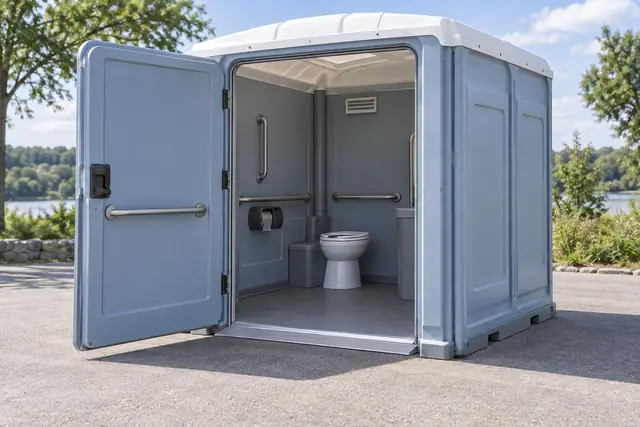
A wider enclosure is only part of the question
A standard portable toilet gives users a private toilet space and retains waste for servicing. A wider enclosure may offer a different interior layout, but width or an accessibility symbol in a photograph does not establish the specification of the model being offered. Ask for the actual accessible option and the features relevant to its intended users.
Consider the approach, entry, interior use and access to handwashing. These are connected functions: a suitable cabin can still be unusable if the route to it or the space needed to open its door is obstructed. Discuss any need for assistance or other practical use requirements without assuming one product label answers them all.
Describe more than one access need when necessary
For example, one attendee may need a step-free route while another needs an arrangement that permits assistance. The closest position to the activity may also be reached through a narrow gap. These are different questions, even when everyone is included in the same accessible-restroom request.
Give the organiser and provider the actual requirements that matter rather than choosing an option solely around the most visible one. Do not share unnecessary personal information. The useful information is the function and route the arrangement needs to support, together with the activities and times when people will use it.
Resolve a position that does not work
Compare the proposed position with another permitted location if the approach or use space is unsuitable. The property operator needs to agree where equipment may stand, and the provider needs to assess the actual equipment, stable support and handling access. A convenient corner is not automatically an acceptable alternative.
Keep access to the activity practical as well as access to the toilet itself. If no proposed model and position meet the brief, review the arrangement before confirming it. Do not treat a distant unit, an unsuitable washing point or an unapproved route as an adequate substitute merely because a cabin has been ordered.
Keep the agreed access usable throughout the hire
Record the actual model, its position, washing provision, period of use and the agreed cleaning and supplies. Identify a contact who can report when queues, furniture or changes to the ground make the approach less usable. Ordinary site checks do not authorise moving or modifying hired equipment.
Delivery and collection must also be workable without leaving the intended users without facilities during their occupied period. Ask the provider to confirm the complete scope, including service access. Equipment selection and this planning discussion are not a certification of an entire event or property.
Questions before you book
Can a picture establish that a unit meets my requirements?
No. Confirm the actual offered model and the functions your users need, then assess its approach, position and washing arrangement.
Should I mention different needs within the group?
Yes. Relevant practical requirements can change the equipment or layout. Explain those functions without providing unnecessary private details about individuals.
What if the agreed approach becomes blocked?
Ask the site contact to resolve the obstruction and involve the provider if equipment placement must change. Do not move or modify hired units yourself.